
green mam

Empowerment of women

Agroecological transition

Economic recovery

The GREEN MAM programme proposes an integrated approach, based on three objectives, combining women's empowerment, agro-ecological transition, economic valorisation and environmental preservation, in order to promote sustainable and inclusive agriculture and to improve the living conditions of women and the Grand Suza community.

Goal 1: Empowerment and collective governance

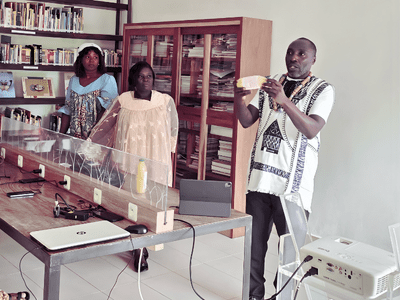
Women benefit in usufruct from land parcels belonging to the MAM Foundation (1 woman = 1 hectare), as well as equipment. Training in entrepreneurship and the use of digital tools reinforce their skills. The creation of an agricultural cooperative, run exclusively by women members and supported by a steering committee, promotes the sharing of knowledge and collective management of farms.

01

Land allocation and logistical support

Provision of the women of Grand Suza, in the form of usufruct, several tens of hectares of land belonging to MARHA (MAM Foundation).

The Green MAM programme is as follows:

  • Consultation with village authorities and women's associations.
  • Definition of a group between 15 and 20 women.
  • Presentation of the program in the presence of husbands, fathers, brothers..., in order to avoid any control over the land and to ensure a good understanding of the program and to guard against any subsequent opposition.
  • Signing of a supply agreement and a specification obliging beneficiaries to comply strictly with the rules laid down in particular with regard to agroecology.

This should be supported by the advice and support of institutional bodies.
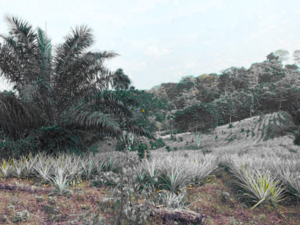
Provide suitable agricultural equipment and tools, and means of transport to facilitate access to land and optimize travel.

Through integration of the programme « Green MAM », in support of agri-food companies and partners, the MAM Foundation wishes to make available to beneficiaries the agricultural tools and equipment, as well as the equipment needed to start their operations.
The ability to transport between women's homes and the plot to grow remains a real challenge, as well as securing agricultural products against theft.
The Foundation is considering appropriate and low-polluting means of locomotion.
The safety of parcels is discussed in depth with the farmers concerned.

02

Training in agricultural entrepreneurship

The gathering of women beneficiaries of the Green MAM programme within a self-managed agricultural cooperative will help to develop their entrepreneurial capacity, pool needs and resources, and sustain the project. To achieve this objective, the MAM Foundation is implementing a training and support programme in partnership with local women's associations. This programme aims to strengthen the skills of the participants in the management of a cooperative, in financial management, rural entrepreneurship, inventory management, group sales, while providing technical follow-up and field support. The training will integrate modules on digital tools to support their activities. The ultimate objective is to ensure rigorous, collective and transparent financial management and to strengthen the economic autonomy of beneficiaries.

03

Creation of an agricultural cooperative by women in Grand Suza

The third stage of this programme is the administrative and legal creation of an agricultural cooperative, which will be led by a committee composed of representatives of beneficiaries, lawyers and members of the MAM Foundation. At the end of the various stages described above, they will become members of the cooperative after a period of several months of accompaniment, women who will meet the criteria established in advance (motivation, training, ethical commitment, etc.).


This cooperative will address challenges such as limited access to resources, modern technologies, and promote environmentally friendly agriculture.

Objective 2: Agro-ecological transition and enhancement of botanical knowledge

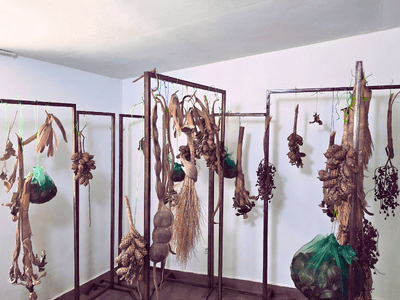
The project promotes agroecology through training. The establishment of a herbarium and a grain library at the Fabrique de Suza helps to preserve biodiversity, enhance local seed and transmit botanical knowledge.Cultural workshops and cross-scientific residences complete this process by valuing the traditional heritage linked to medicinal plants, tinctoriales and culinary know-how.

01

Training in agroecology

Under the Green MAM programme, agroecology training aims to enrich the knowledge of beneficiaries, to share practical and theoretical knowledge, both modern and traditional, respectful of the environment and sustainable agricultural practices. These training modules are offered in parallel with courses in rural management and entrepreneurship.

The basic principles of agroecology, including the implementation of polyculture systems that promote crop diversification and eliminate dependence on chemical inputs, are presented to the participants, as well as soil restoration techniques, to improve fertility and preserve biodiversity, without omitting sustainable water management.

These courses will address the use of biopesticides and biofertilizers. Participants will be able to compare their practice with alternative methods such as mulching or composting versus burning ... This training component in agroecology strengthens the capacity of women to manage their farms independently and harmoniously.

02

Herbier, source of knowledge

One of the flagship projects of the Suza Factory, L-herbier values botanical knowledge and plays a central role in the Green MAM programme. Beyond identifying and preserving local biodiversity, the herbarium is an essential resource for women farmers.

The latter will be able to identify species for feeding, but also for natural fertilization and crop protection. The grain library promotes seed autonomy and the preservation of local crops, thus guaranteeing agriculture less dependent on external inputs.

Practical workshops allow the transmission of essential botanical knowledge on plant properties, cultivation techniques adapted to agroecological principles and traditional uses of local species. Finally, through scientific residences and exchanges with the community, the herbarium contributes to cultural anchoring and agricultural innovation in Grand Suza.

During the collection in Grand-Suza, as part of the MAM Foundation's herbarium project, the plant Allablanckia was highlighted by botanist Eric Ngansop. This tropical plant of the Clusiaceae family is found in several species, four of which have been identified in Cameroon. From the species present in Grand-Suza, which is Parvifolia, one can extract from the seeds an oil very rich in stearic and oleic acids which is highly sought after in the food and cosmetics industry. Finally, the bark of the Allanblackia has therapeutic virtues against chronic coughs. After training at the MAM Foundation, the women of Grand Suza are determined to invest in this agroecological transformation project.

03

Valorization of biodiversity and transmission of botanical knowledge

In addition to the practical agroecological workshops, the MAM Foundation organizes residences and cultural and/or scientific events dedicated to the transmission of heritage knowledge in particular those related to medicinal plants, tinctoriale plants ...

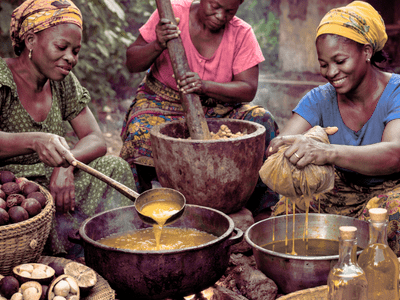
For example, in order to rediscover little known or forgotten culinary preparations, the Foundation organizes culinary art residences that value recipes inspired by Cameroonian culinary tradition, based on plants grown in Grand Suza. This creative project includes the drafting of a traditional recipe book (in digital format), which will highlight the diversity of Cameroon's vegetables and fruits and will stimulate the production and marketing of these plants by the cooperative. Other initiatives enrich this programme, such as the creation of natural dyes from tinctorial plants in order to produce prints on textiles, such as the organization of extension workshops on the use of therapeutic plants. These actions aim to preserve and transmit the botanical and cultural heritage of the region while strengthening the anchoring of agroecological practices in the community

Objective 3: Sustainable promotion and marketing of agricultural products

Processing infrastructures (moulins, drying units, preservation and manufacturing of derived products) will be developed to add value to agricultural products. The creation of an eco-responsible label, combined with digital traceability solutions, will guarantee the authenticity and quality of products while promoting local territory and know-how. At the same time, training is planned on structuring distribution networks and developing strategic partnerships to facilitate access to local and regional markets.

01

Processing and conservation units

The MAM Foundation is planning the development of integrated processing equipment within the agricultural cooperative, such as mills, drying, preservation and manufacturing of derivatives. The aim is to diversify the resources of farmers, add value to harvested products, extend the shelf life, and fine increase women's incomes.

These are:

  • install infrastructure: spaces dedicated to drying, preservation, packaging and manufacturing of derivatives. The equipment will be provided by the MAM Foundation,
  • support: practical workshops and training sessions on processing techniques, facilitated by experts, to optimize product quality
  • to integrate appropriate technologies: environmentally friendly processes, focusing on energy-efficient equipment compatible with an agro-ecological approach.

An assessment of the needs and projects of producers is carried out throughout the process of training and setting up the agricultural cooperative.

02

Ecolabel

In order to certify the origin, sustainable practices and quality of products from the agricultural cooperative, the MAM Foundation wishes to create an ecolabel in consultation with experts in agroecology and members of the cooperative.

This includes:

  • The development of a specification: defining sustainable production criteria, including the use of agroecological practices and rational management of resources.
  • The establishment of a traceability system: integrating digital tools to monitor the entire production process, from culture to marketing, in order to ensure transparency and credibility of the label.
  • A Certification Process: Use local and recognized certification bodies to validate compliance with established standards (ANOR).
  • Communication and promotion of the label: promoting ecolabel among consumers and market participants, in order to create a genuine recognition of the quality and sustainability of the products, thereby strengthening their commercial attractiveness.
03

Access to distribution networks and strategic partnerships

All these actions will be reinforced by the organisation of workshops so that beneficiaries of the programme can access new markets and develop partnerships with distribution cooperatives and responsible businesses.

The actions envisaged include:

  • Structure of distribution networks: Organize training on marketing, negotiation and structuring of distribution networks, drawing on the expertise of partner organisations and local economic actors.
  • Strategic Partnerships: Facilitate linkages with distribution cooperatives, responsible businesses and fair trade distributors.
  • Using digital tools and digital marketing: Supporting beneficiaries in adopting digital marketing tools (websites, online sales platforms, social networks) to increase their visibility and reach a wide audience.
  • Participation in trade fairs and fairs: Encourage the participation of members of the cooperative in trade events and fairs dedicated to agroecology and sustainable products, to promote exchanges and create opportunities for partnerships.